ServicesChlorine & Chloramine Removal
Chlorine & Chloramine Removal in St. Petersburg
City water is disinfected on purpose, and that is a good thing. But you don't have to smell it in the shower or taste it in your ice. We explain which disinfectant you're dealing with, what removes it, and install a system sized to your home.
How this service works, in everyday words
To keep water clean across miles of pipe, utilities treat it with a disinfectant. Some choose chlorine. More and more choose chloramine, a mix of chlorine and a little ammonia. It holds up longer in the pipes, and it stays in your glass longer too.
That makes a difference when choosing a filter. Ordinary activated carbon removes chlorine without much trouble. Chloramine resists. It takes catalytic carbon and longer contact, so the tank must be bigger or the water must move through the media more slowly. Plenty of low-cost filters claim chlorine removal and never mention chloramine. That gap is often why people call us after a filter let them down.
The annual water quality report from your utility names the disinfectant it uses. If you can't tell which one you have, we'll help you track it down before suggesting any equipment.
What you get with the job
The correct carbon
The media fits the disinfectant: standard carbon for chlorine and catalytic carbon for chloramine. We don't guess.
A tank sized for your household
We tally your bathrooms and ask how water gets used at the busiest hour. If the tank is too small, chloramine gets past when two showers are running together.
Pre-filter for sediment
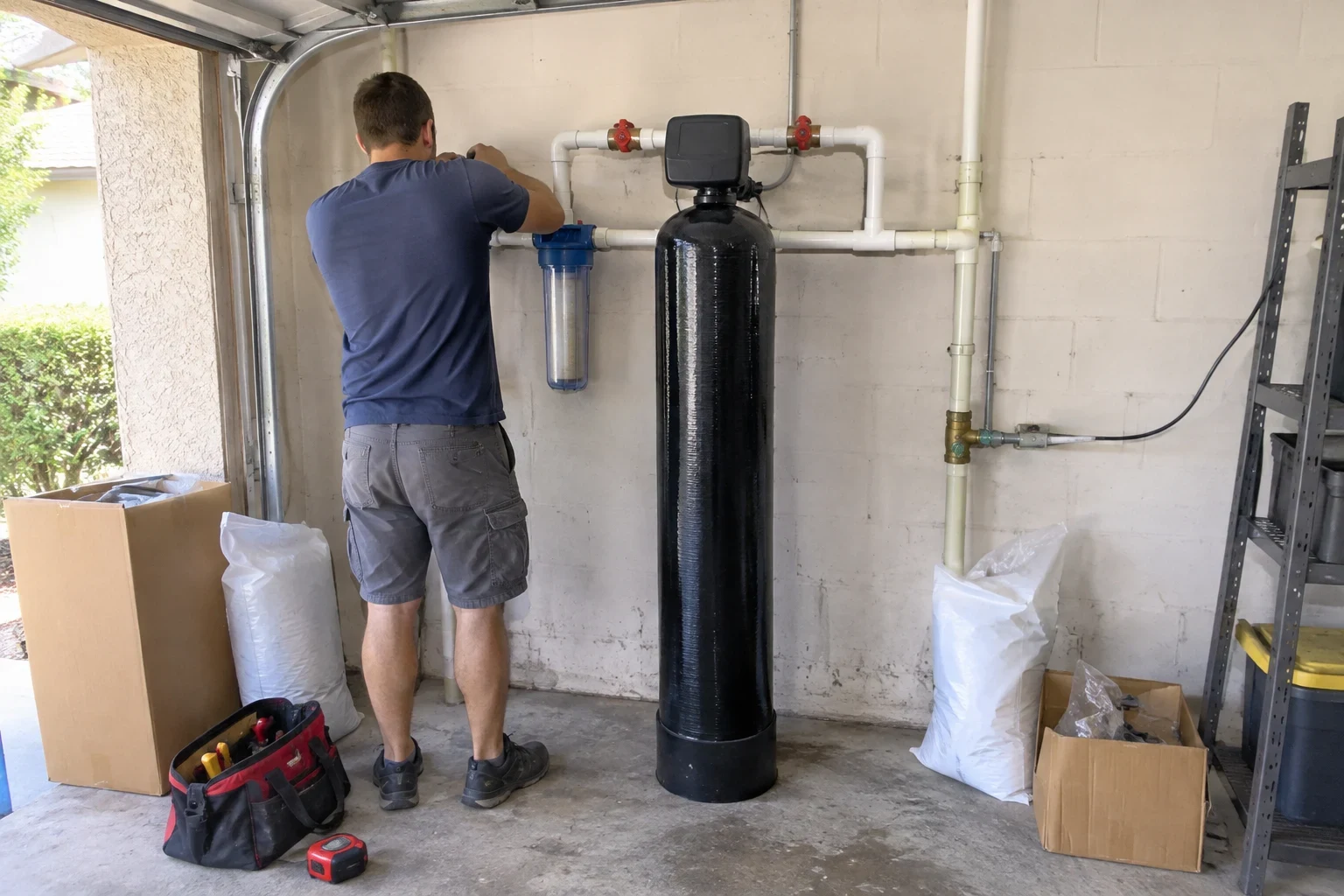
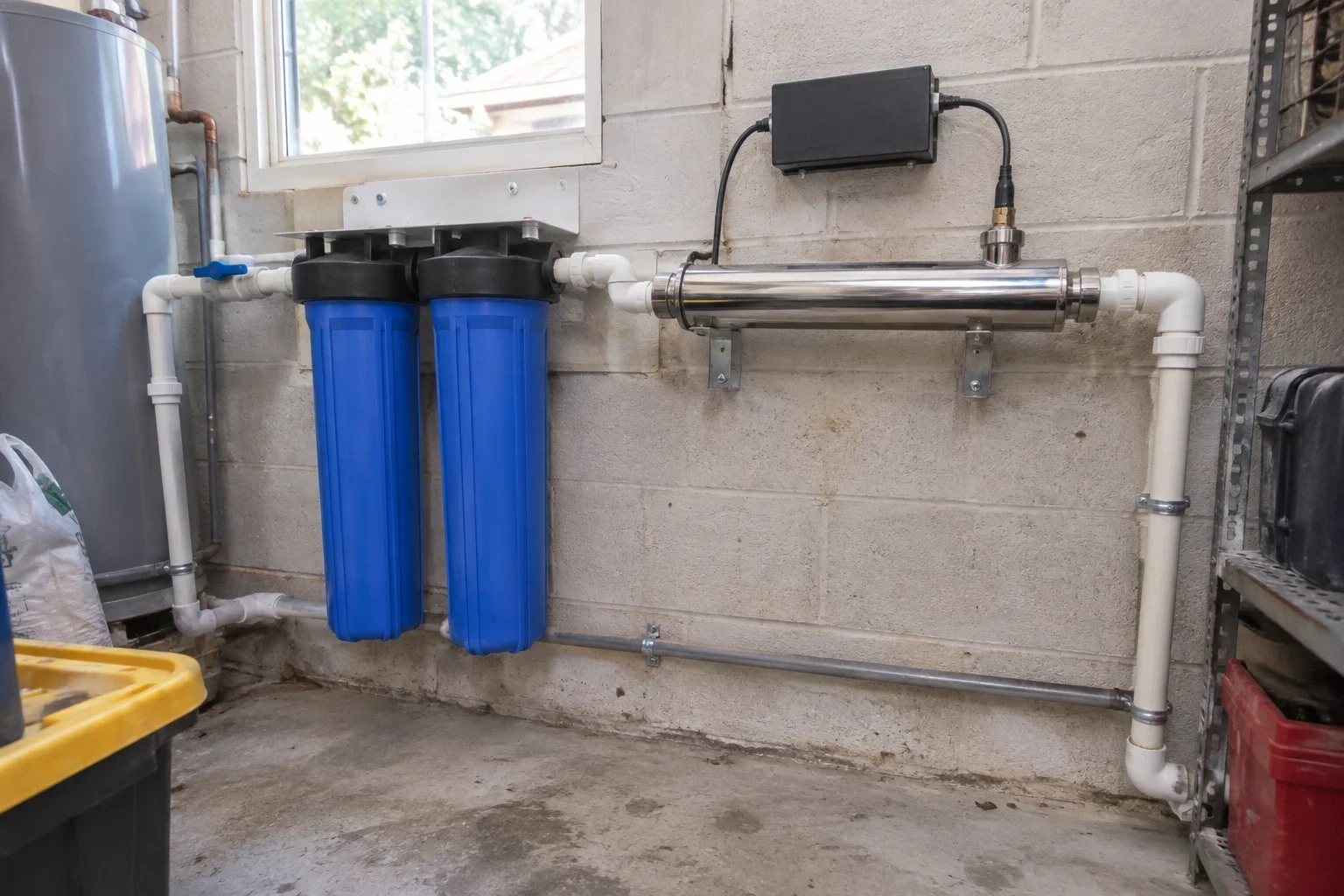
A cartridge in front of the tank catches sand and flakes of pipe scale. It keeps the carbon from clogging, which helps it last longer.
A bypass valve
We fit a bypass valve at the system. If the tank needs service, a single turn sends water around it and your taps keep working. We show you where it is and how to use it.
Tidy install and rinse
We rinse the fresh media until the water comes out clear, check each joint for leaks and clean up the area before we go.
Help after it's in
We remain on call for upkeep, cartridge swaps and any later service. When a filter is due, you know whose number to dial.
Signs the disinfectant is bothering you
A pool smell in the shower
Hot water and steam release more of it. If the bathroom smells like a swimming pool, you are breathing what your tap water carries.
Coffee and tea taste off
Chlorine flavors come through in hot drinks and ice cubes. People often buy bottled water just for the coffee maker.
Your current filter didn't help
If you have a carbon filter and still notice the taste, it may not be rated for chloramine, or the media is spent.
Dry skin or hair after showering
Many people say their skin and hair feel better once the disinfectant is out of the shower water. It is a comfort issue, not a safety one, but it is a common reason people call.
Rubber parts wearing early
Chloramine can be hard on some rubber, like toilet flappers and certain hose washers. Replacing them often is a hint worth noting.
What the job looks like
- 1
We talk by phone
Tell us what's bothering you and how many people live in your home. We'll ask about the plumbing and any filters you already have.
- 2
We find your main line
We stop by to see where water comes into the house, which here is usually the garage or an outside wall. We note the pipe size, the open room and where a drain and power sit, if the system calls for them.
- 3
You get the estimate in writing
It lists the system, the media, the parts and the labor. If a kitchen sink filter would solve your problem, we tell you straight out.
- 4
Install day
First we tell you how long the water will be shut off. Then we close the main, add the bypass, mount the pre-filter and the tank, and rinse the carbon. In most homes the water is back on by afternoon.
- 5
We show you around
We show you the bypass and the pre-filter and explain when each will need care. Then you run the shower and smell the difference yourself.
What sets the price
The biggest pieces are the disinfectant in your water and how much water your household runs at one time. How easy the plumbing is to reach counts as well. Our estimate walks through each one, so nothing pops up afterward.
- Which disinfectant you have
- Catalytic carbon is pricier than standard carbon, and chloramine typically calls for a larger amount of it.
- How many people live there
- Extra bathrooms and extra people push peak flow higher. A bigger tank is needed to keep the water in contact with the carbon long enough.
- Location of the main line
- A short, simple run by the garage costs less than routing pipe around a slab or a tight wall. Equipment installed outside may need a cover to shield it from the sun.
- Equipment already in place
- Pulling out an old system or fitting around a softener takes extra time. If your old one has to go, our Water Softener & Filtration System Replacement page explains that job.
What homeowners ask about chlorine and chloramine
Something not covered here? (727) 435-1866
Is it unsafe to drink city water that has chlorine in it?
No. The utility adds chlorine or chloramine so the water stays safe, and the amount is regulated. Taking it out is about how the water tastes, smells and feels. We won't scare you into a purchase.
Can a pitcher or refrigerator filter handle chloramine?
Most cut chlorine, and a few make a small dent in chloramine. They also cover only the water you drink, never the shower. If the kitchen tap is all you care about, see our Reverse Osmosis page for a sink option.
Should the system treat the whole house or only one sink?
To get rid of the smell in the shower, it needs to treat the whole house. If drinking and cooking water is your only concern, a system at the sink may do. Our Whole-Home Filtration page covers systems that also deal with sediment and more.
How long before the carbon wears out?
That depends on your water use and the level of disinfectant. Chloramine uses up carbon sooner than chlorine does. We give you an honest time range for your household and tell you the signs to watch.
Does this system soften the water as well?
No. Carbon takes out the disinfectant and leaves hardness minerals in place. Scale on your fixtures is a different issue, covered on our Water Softeners page.
Clear the chlorine smell from your water
Let us know what you're noticing, and we'll explain the fix in everyday words. We serve St. Petersburg and nearby towns such as Gulfport and Pinellas Park.