ServicesWhole-Home Filtration
Whole-Home Filtration in St. Petersburg
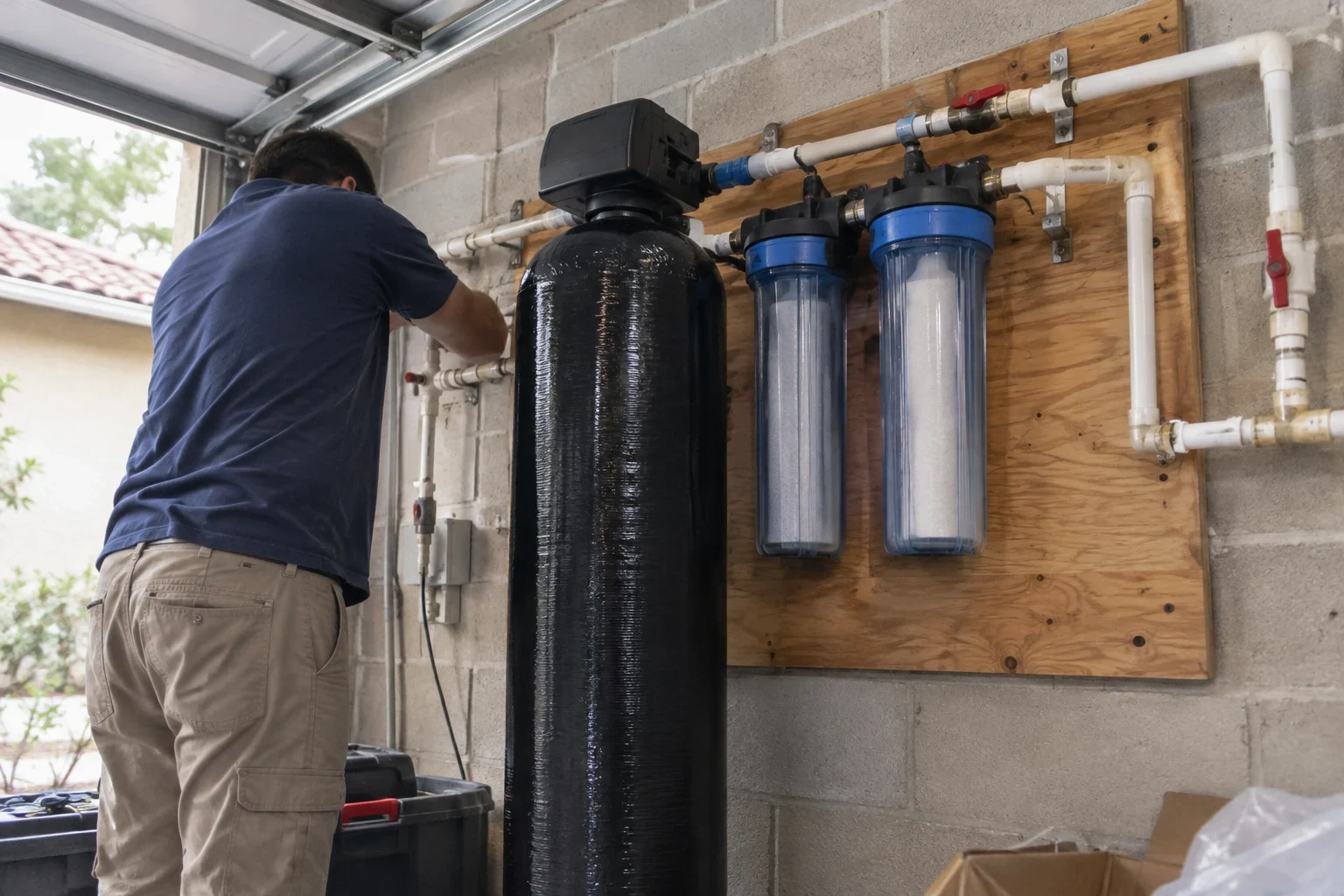
A whole-home filter sits on the main water line and treats every gallon before it reaches a tap. We tell you what it removes, what it leaves alone, and which size fits your home. You decide with the facts in front of you.
What a Whole-Home Filter Actually Does
City water is safe to drink, but it is disinfected on purpose. That disinfectant is what you smell in the shower and taste in a glass of ice water. A whole-home filter uses a tank of carbon to pull it out, along with sediment and some other things that affect taste and odor.
It goes in where the main line enters your home, so the kitchen, the bathrooms, the washer and the hose bibs inside the loop all get the same water. That is the difference from a pitcher or a faucet filter, which only covers one spot.
Here is what it is not. A carbon filter does not soften water, and it is not built to strip out everything dissolved in it. If scale is your problem, a water softener is the better tool. If you want the cleanest possible drinking water at one sink, reverse osmosis does that job. We will say so on the call.
What the Install Includes
Prefilter for sediment
A cartridge in front of the main tank traps sand, grit and rust flakes. That shields the carbon so it lasts longer, and the cartridge is inexpensive and simple to change.
A carbon tank matched to your flow
Tank size follows your bathroom count and how much water runs at the same time. Go too small and pressure drops when two showers run. Where the utility uses chloramine, we fill the tank with catalytic carbon, which removes it much better than plain carbon.
A bypass valve
Each system comes with a bypass. To service it or switch it off, turn one handle and the house keeps its water.
A neat tie-in to your plumbing
We cut into the main, connect the system with the right fittings and shutoffs, and pressure-test each joint before leaving. Here the main is often outdoors or in the garage, so we mount the system where it stays protected and easy to get to.
Walkthrough and upkeep plan
With water running through the new system, we show you the bypass handle and the cartridge housing and name the few things to watch. We don't disappear after install day. Call us later for maintenance, new filters and any service the system needs.
Signs a Whole-Home Filter Makes Sense
Pool smell in the shower
A chemical smell when the hot water runs is the disinfectant coming off as steam. Filtering at the faucet doesn't touch it. Filtering at the main does.
Dry skin or itchy scalp after bathing
Some people notice it, some don't. If you do, removing chlorine or chloramine from the shower water is the usual fix.
Everyone buys bottled water
If the household won't drink from the tap because of the taste, a whole-home filter usually changes that for every faucet, not only the kitchen.
Grit in aerators or toilet tanks
Sand or flakes collecting in faucet screens point to sediment in the line. The prefilter catches that before it reaches fixtures and appliances.
Too many small filters to keep up with
A pitcher, a fridge filter and a showerhead filter all need changing on different schedules. One system on the main line replaces most of that.
How the Job Goes
- 1
Phone conversation
Describe what bugs you about your water, who lives there and how many bathrooms you have. We lay out which options fit your home and which ones don't, in everyday words.
- 2
Look at the setup
We check where the main enters, what the pipe is made of, and how much room there is. That decides where the tank goes and what fittings we need.
- 3
Install day
First the main gets turned off. Then the new system goes into the line along with its bypass, and we bring the water back up gradually so the fresh carbon rinses out. Expect to be without water for part of the day, not the whole thing.
- 4
Check and clean up
We test for leaks, check pressure at a faucet, haul away packaging and cut pipe, and show you how everything works before we head out.
What Changes the Price
There is no single price for a whole-home system because homes are not the same. The tank size, the plumbing and where it all goes make the biggest difference. We explain each piece on the phone so nothing on the bill is a surprise.
- How much water you use at once
- A house with three bathrooms and five people pulls a lot more water at the same moment than a two-person condo. Higher demand needs a larger tank holding more carbon.
- Type of carbon
- Plain carbon handles chlorine well. Catalytic carbon costs more but is the right choice for chloramine.
- Pipe and location
- Copper, PEX and older galvanized pipe each tie in differently. An outdoor main may need a cover or extra work to protect the system from sun and weather.
- Add-ons
- Some homes also need a softener or an under-sink reverse osmosis unit. Those are separate pieces and only worth adding if they solve a real problem you have.
Questions About Whole-Home Filters
Something not covered here? (727) 435-1866
Does a whole-home filter lower water pressure?
With a tank that fits your home, you shouldn't notice any change at the faucet. A pressure drop usually comes from a tank too small for the house or a prefilter cartridge clogged with grit. We size the tank to your bathrooms and teach you to change the cartridge, so neither one surprises you.
When does the carbon have to be replaced?
It depends on how much water your home uses and what the carbon is removing. The prefilter cartridge gets changed more often, typically every few months. We set a schedule for your household and handle filter replacements when they come due.
Will I also need a softener?
Maybe not. Carbon doesn't take out hardness, so white crust on fixtures and spotty glasses call for a softener. If taste and odor are all that bother you, the filter by itself may be enough.
Are chlorine and chloramine different?
Yes. Chloramine is chlorine joined with ammonia, and it lasts longer as it moves through the pipes. Because it is so stable, plain carbon struggles to remove it. Our chlorine and chloramine removal page explains more.
Can this make unsafe water safe?
City water already meets drinking water standards. A whole-home filter takes out the disinfectant and sediment and improves taste and smell. For extra treatment of the water you drink and cook with, reverse osmosis at the kitchen sink is the better choice.
Want to Know if This Fits Your Home
Tell us what you notice and how your home is set up. We'll explain the options in plain terms and size a system that fits.