ServicesSystem Replacement
Water Softener & Filtration System Replacement in St. Petersburg
Your old softener or filter system has worn out, or never fit your water to begin with. We take it out, tell you plainly what should replace it and why, and install the new system so your home has treated water again.
When repair stops making sense
Most softeners and filter systems wear out slowly. The control valve gets tired, the resin breaks down, a tank cracks, or parts for an older model are hard to find. At some point you are paying to keep alive a unit that is not doing its job.
Replacement is also a chance to fix a mismatch. A lot of the systems we pull out were the wrong size for the home, or a softener was installed where a carbon filter was what the water needed. We will tell you which case you are in.
If your unit is fairly new and just acting up, our Water Softener Repair & Maintenance service may be the cheaper fix. We will say so.
What a replacement includes
Removal of the old unit
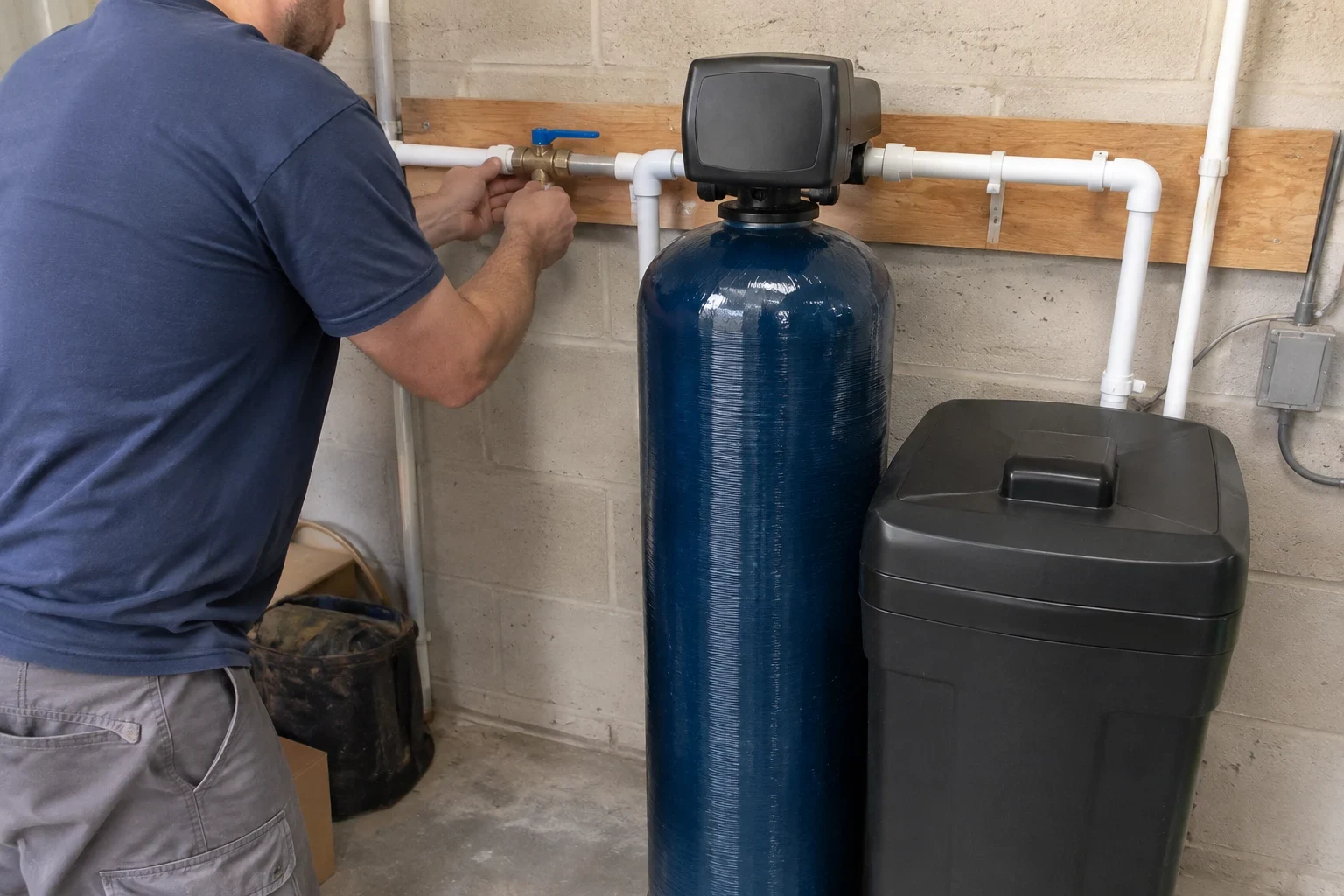
We shut off the water, put the house on bypass, drain the old tanks and load the old equipment onto our truck. No heavy tank gets left behind in your garage.
A plain-English recommendation
We explain what each option does: a softener handles hardness minerals, carbon handles chlorine and chloramine taste and odor, and reverse osmosis cleans drinking water at one tap. You choose with the facts in front of you.
Right-sized equipment
The new system is sized to your home's plumbing and the amount of water your household goes through. Undersized, it falls behind. Oversized, it burns through salt or media for no reason.
Plumbing, bypass and drain
We swap out worn fittings, install a bypass valve that actually works so the system can be serviced later, and run the drain line with a proper air gap.
Startup and settings
We fill and flush the new tanks, program the valve and look for leaks before we pack up. Then we walk you through the controls and what to watch.
Help once we're gone
You can keep calling us after the job is done. That covers routine upkeep, new filter cartridges, and a service visit when something doesn't look right.
Signs it's time to replace your system
- Spots and scale are back
- If white spots on glasses and fixtures have returned even though the softener is running and has salt, the resin may be spent.
- Chlorine smell has returned
- A carbon filter that has run its course lets the pool smell come back in the shower and the kitchen tap. Older tanks sometimes can't be rebedded in a way that's worth the money.
- Leaks or a cracked tank
- Water around the base, a cracked brine tank or a weeping valve body usually means the shell is done. Garage installs in our humid, salty coastal air can corrode fittings faster than you'd expect.
- Constant cycling or no cycling
- A valve that regenerates over and over, or never does, often points to a failing control head. On older models the replacement part can cost close to a new unit.
- Low water pressure through the house
- Clogged media or an undersized system can choke the flow. If the pressure comes back when you put it on bypass, the system is the problem.
How replacement day goes
- 1
A phone conversation first
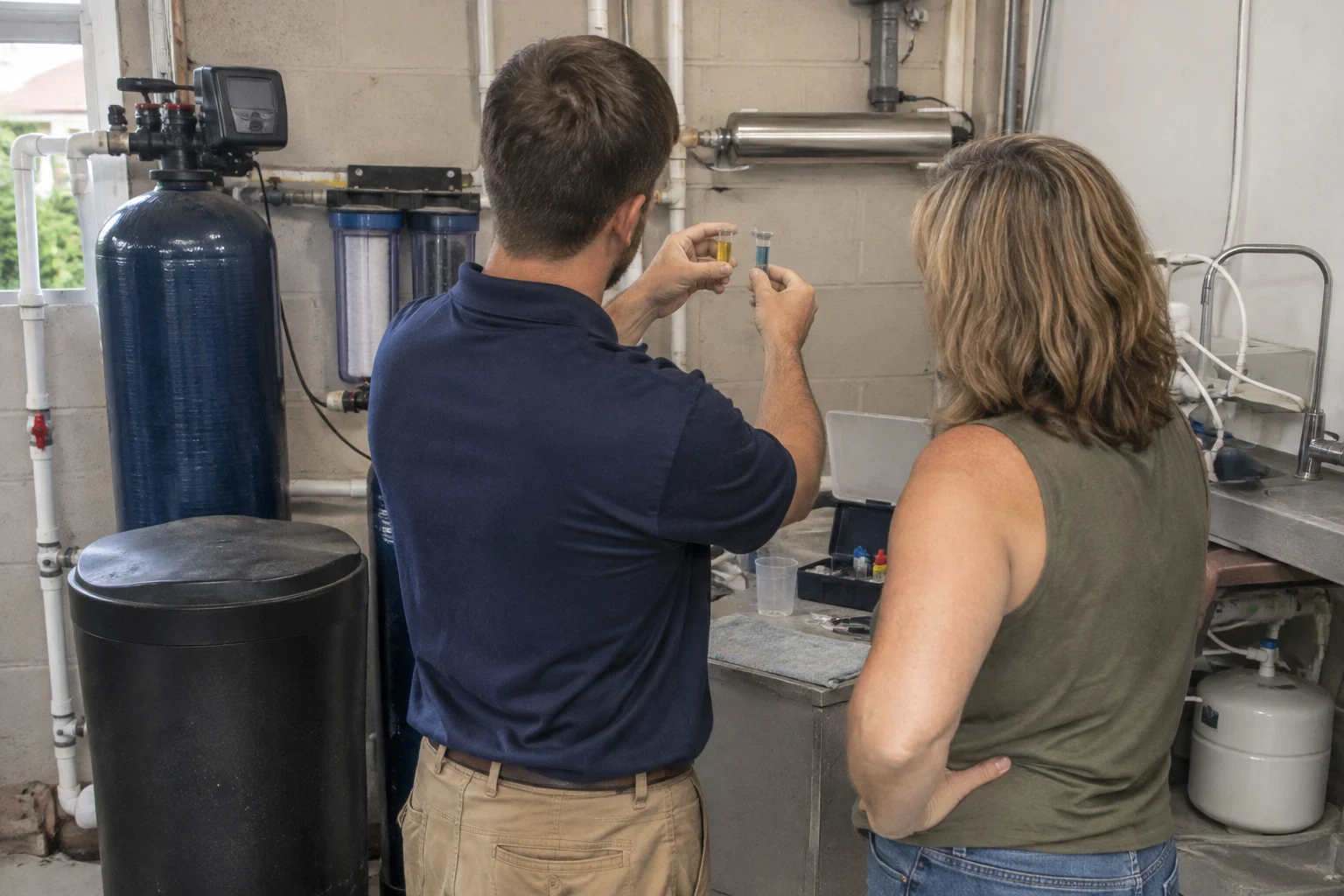
Describe the system you have now, roughly when it went in and what's bothering you about it. We ask a few things about your home and water use so the right equipment comes with us.
- 2
We look at the old setup
On site we check the model, the plumbing around it, the drain and the outlet. If something beyond the swap needs fixing, you hear about it before we start.
- 3
Out with the old, in with the new
Water is off for a few hours, not all day. We lay down floor protection, pull the old system and set the new one in the same spot when it fits.
- 4
Flush, leak check, walk-through
We flush the new media, set the controls and run water through the house. Then we show you the bypass, the settings and when to add salt or change filters, and we clean up.
What moves the cost of replacement
We can't put a fair number on it until we know what's coming out and what's going in. A few real things set the price. We go over each one with you before any work starts, so the bill holds no surprises.
- Type of new system
- A softener, a whole-home carbon filter and a combination system are different equipment at different prices. Reverse osmosis at the kitchen sink is its own line if you add it.
- Size of your home and household
- More bathrooms and more people pull more water at once. That calls for a bigger tank or more media.
- Condition of the plumbing
- Corroded copper, old galvanized fittings or no bypass valve mean extra parts and labor. We show you these before we begin.
- Where the system sits
- Swapping equipment that stands in the open with room around it goes faster. A cramped closet, or a spot that needs a new drain line run to it, takes more time and material.
Questions about replacing a softener or filter
- Should I repair my softener or replace it?
- It depends on the age and the part that failed. A worn seal or a stuck valve on a newer unit is usually worth fixing. A cracked tank, spent resin or a discontinued control head on an older unit usually is not. We give you a straight answer either way.
- Can you put the new system where the old one was?
- Most of the time, yes. We reuse the location and hook-ups when they're in good shape. If the old spot had a bad drain or no bypass, we fix that as part of the job.
- Do I need the same kind of system I had before?
- Not always. Many homes have a softener when what bothers them is chlorine taste, which a carbon filter handles. Others want both. We explain what each does so you replace with what fits your water.
- How long will I be without water?
- Usually a few hours. We put the house on bypass early, so you often have untreated water for most of the visit and only a short full shutoff.
- What happens to my old equipment?
- We remove it and take it with us. Tanks full of resin or carbon are heavy and messy, so you won't have to deal with them.
Ready to be done with the old unit?
Tell us what you've got and what it's doing. We'll explain your options in plain terms and plan the swap for your home in St. Petersburg or a nearby town.