ServicesWater Softeners
Water Softeners in St. Petersburg
Hard water leaves chalky rings on your faucets and a layer of scale inside your water heater. A softener trades out those minerals before they reach your pipes. We size each unit to your home, explain how it runs and tell you plainly when another system would serve you better.
What a softener fixes, and what it leaves alone
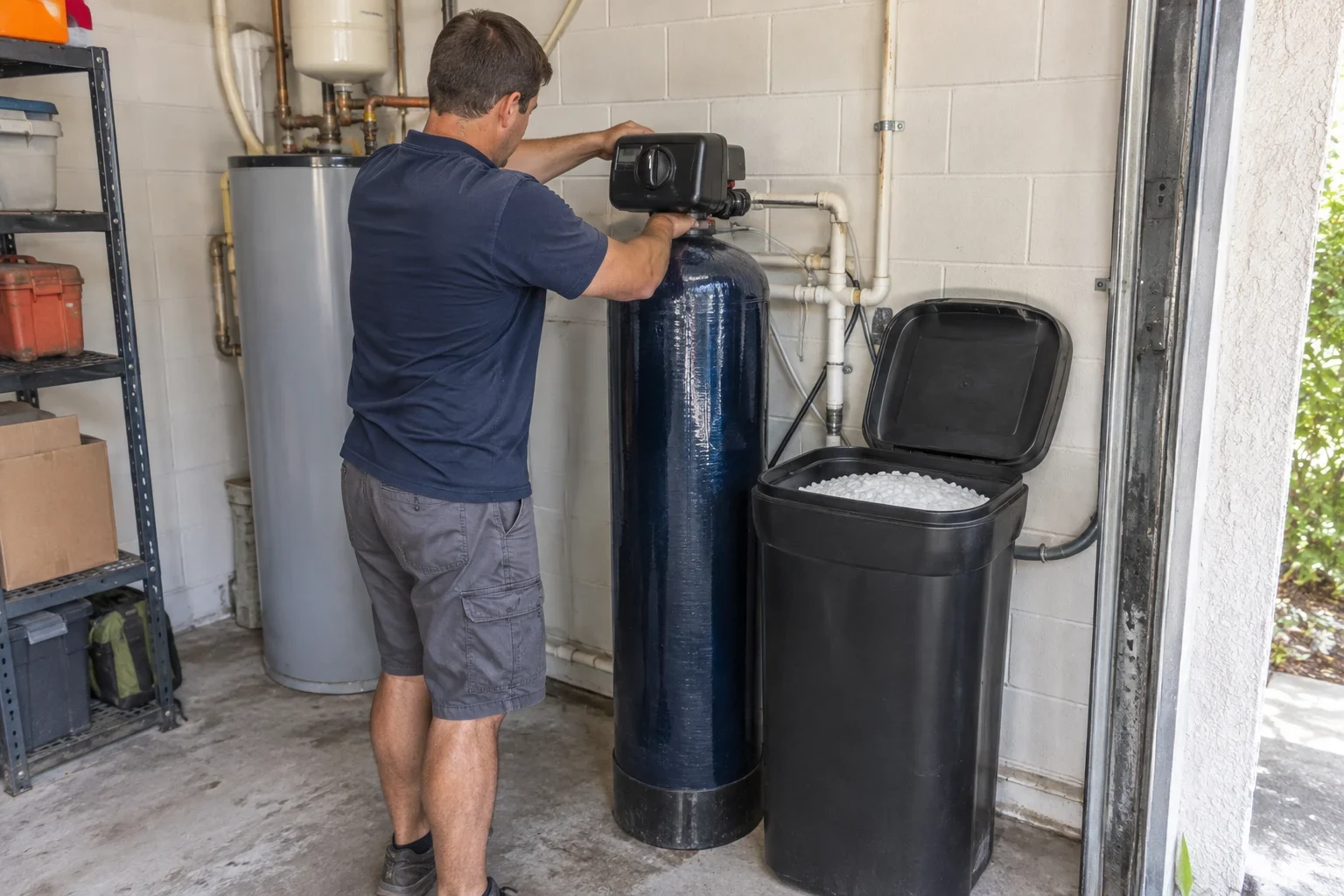
Hardness is calcium and magnesium dissolved in your water. Inside a softener, the water passes over a bed of small resin beads. Those beads hold on to the hardness minerals and give back a little sodium or potassium in their place. Every few days the unit washes the beads with salty water from the brine tank, sends the minerals to a drain and gets ready to go again.
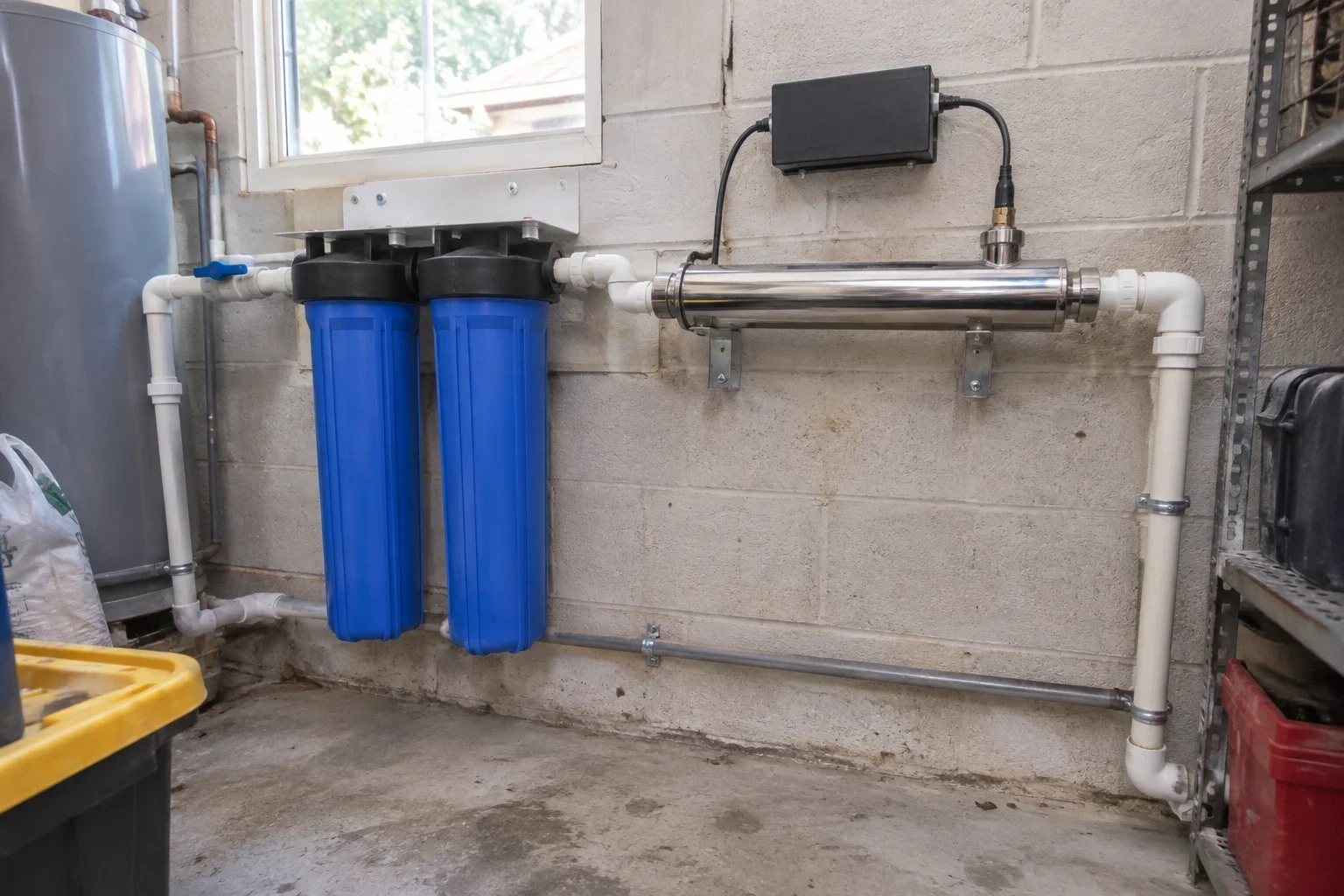
Something many people aren't told: a softener only handles hardness. Chlorine taste, odor and most other things in your water pass right through it. If the tap smells like a swimming pool, look at our Chlorine & Chloramine Removal or Whole-Home Filtration pages first. A lot of homes run a filter and a softener side by side, and we'll be honest about whether yours needs both.
What comes with a softener install
- A unit sized to your household
- We base the size on your water hardness and the number of people in your home. An undersized unit cycles over and over. An oversized one lets water carve paths through the resin. We walk you through the numbers.
- Bypass valve
- We put a bypass on every unit. Turn it and water flows around the softener while the house keeps running, which makes later service easy.
- Drain line with an air gap
- Each regeneration rinse has to go somewhere. We run a drain line with an air gap so dirty rinse water can never pull back into the unit.
- Metered control head
- Our usual pick is a valve that regenerates by the gallons you use instead of on a set schedule. In a light week it holds off and saves salt and water.
- Setup and walk-through
- We program the valve, add salt to the brine tank, run the first cycle and show you how to read the display and where the salt goes.
How to tell hard water is behind it
Chalky buildup on fixtures
A white crust around faucet bases and showerheads is mineral scale. Scrub it off and it's back within days.
Cloudy glasses, spotted shower door
Dishes leave the dishwasher with a haze, and the shower glass never comes clean. That film is hardness minerals left behind as water dries.
Soap that barely suds
Calcium and magnesium grab onto soap and keep it from lathering. You keep pumping more body wash and dish liquid to get bubbles, and a thin film clings to you after you rinse.
Popping from the water heater
A tank heater that pops or rumbles often has scale sitting on the bottom. It wastes heat and wears the heater out sooner.
Showerheads losing pressure
Scale clogs the tiny openings in showerheads and aerators. If a good soak brings the flow back, hardness is the likely culprit.
Where the cost of a softener comes from
Softeners that look the same on a shelf can land at very different prices once they're in your home. The gap usually comes from tank size, the valve on top and how much plumbing work the spot needs. Each of these gets its own line on our estimate, so nothing is buried.
Tank capacity
More people in the house and harder water mean the unit needs more resin. A bigger resin tank costs more.
Timer or metered valve
A timer valve is cheaper to buy. A metered valve costs more at first and tends to save salt and water year after year.
Softener loop or main line tie-in
Some houses were plumbed with a ready-made loop for a softener. Without one, we cut into the main line, and that means more parts and labor.
Install spot and drain
When a drain and an outlet sit close by, the job goes fast. A long drain run or a cramped space takes longer.
Adding a carbon filter
Putting a carbon filter in front of the softener raises the total. It also takes out chlorine taste and helps the resin last.
How a softener job goes
- 1
A phone conversation first
You tell us what you're seeing. We ask about your home, your water heater and what you've tried. Many questions get answered right there.
- 2
Look at your setup
We check where your main line comes in, whether there's an existing plumbing loop, and where a drain and outlet are. In a lot of Florida homes that spot is the garage or an outside wall.
- 3
Plain written estimate
You get a line-item estimate that names the unit, its capacity and any plumbing work. We explain each line, and if a softener isn't a good fit, we say so.
- 4
Install day
We shut off your water, cut in the bypass and connections, run the drain line and set the brine tank. Most installs are done in a few hours, and we clean up before we leave.
- 5
Program and explain
We set the hardness and regeneration settings, run a test cycle and walk you through salt, settings and what normal looks like.
Common questions about water softeners
Will softened water taste salty?
Almost nobody notices it. The resin trades the hardness minerals for a small bit of sodium, which is very different from adding salt water. If you're cutting back on sodium, we can fill the brine tank with potassium chloride instead, or put reverse osmosis at the kitchen sink for drinking and cooking.
How hard does my water need to be before a softener makes sense?
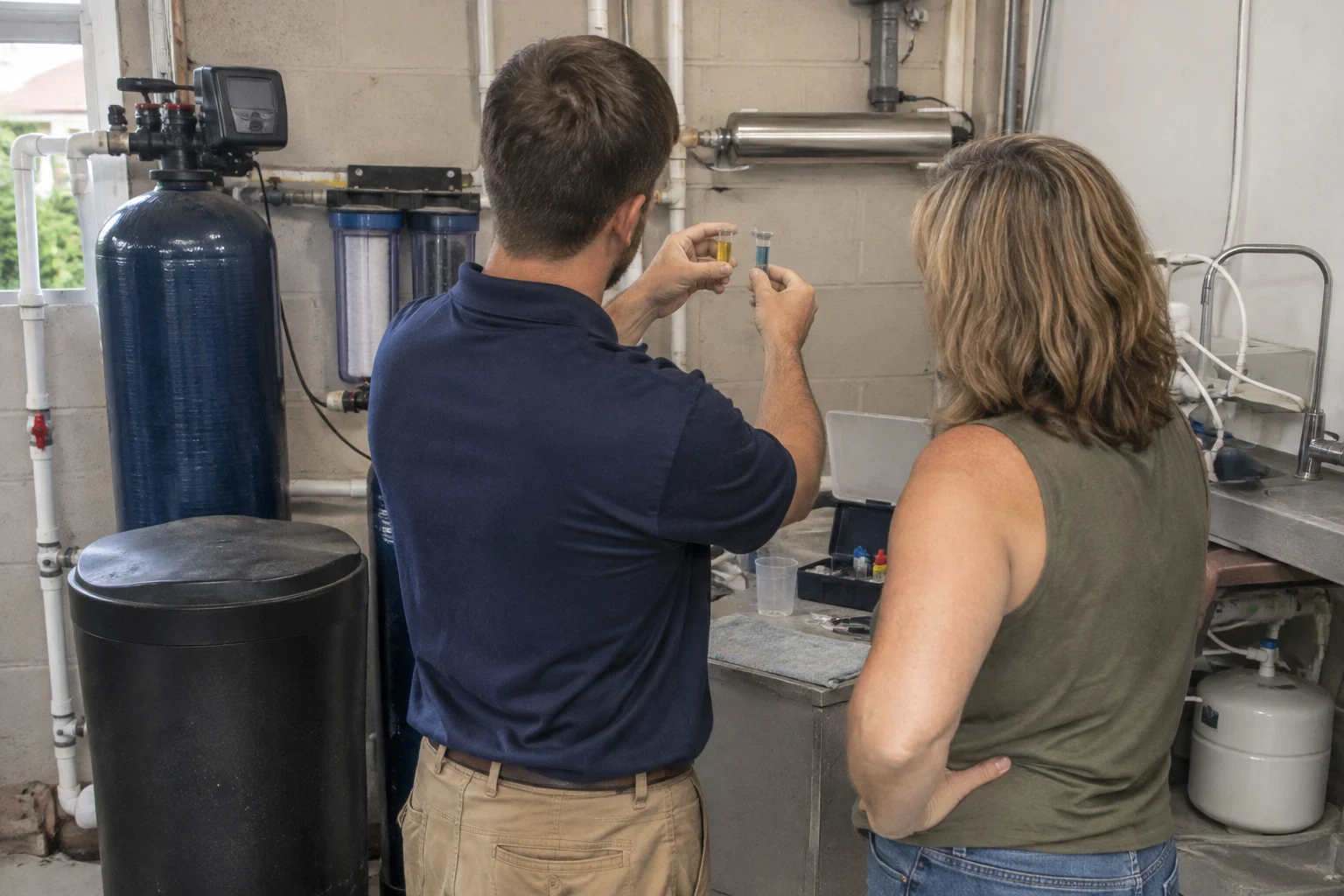
Start with the clues around your home: crusty fixtures, spotty dishes, soap that won't lather. Your water utility also publishes a yearly water quality report, and it lists a hardness number. Call us and we'll go over that number together, then tell you honestly if a softener will pay off in your home or if your money is better spent elsewhere.
What about salt-free softeners?
Those are really conditioners. They change the minerals so less scale sticks to surfaces, but the hardness stays in the water, and some spotting will too. We lay out the trade-off and you make the call.
How much salt will I go through?
That comes down to how hard your water is and how much your household uses. Plenty of people peek in the brine tank once a month and add a bag every month or two. As long as the salt sits above the water level, the unit has what it needs.
Can the softener go in my garage?
Yes. Garages work well because the main line and a drain are usually nearby. We need a level spot, a power outlet and a path for the drain line.
Who do I call if something goes wrong later?
Us. We offer ongoing customer support for maintenance, filter replacements, and service needs. If the unit needs attention down the road, our Water Softener Repair & Maintenance service handles it.
Find out if a softener fits your home
Tell us what you're seeing at the tap and in the shower. We'll explain your options in plain words and give you a written estimate if a softener makes sense.