ServicesWell Water Treatment
Well Water Treatment in St. Petersburg
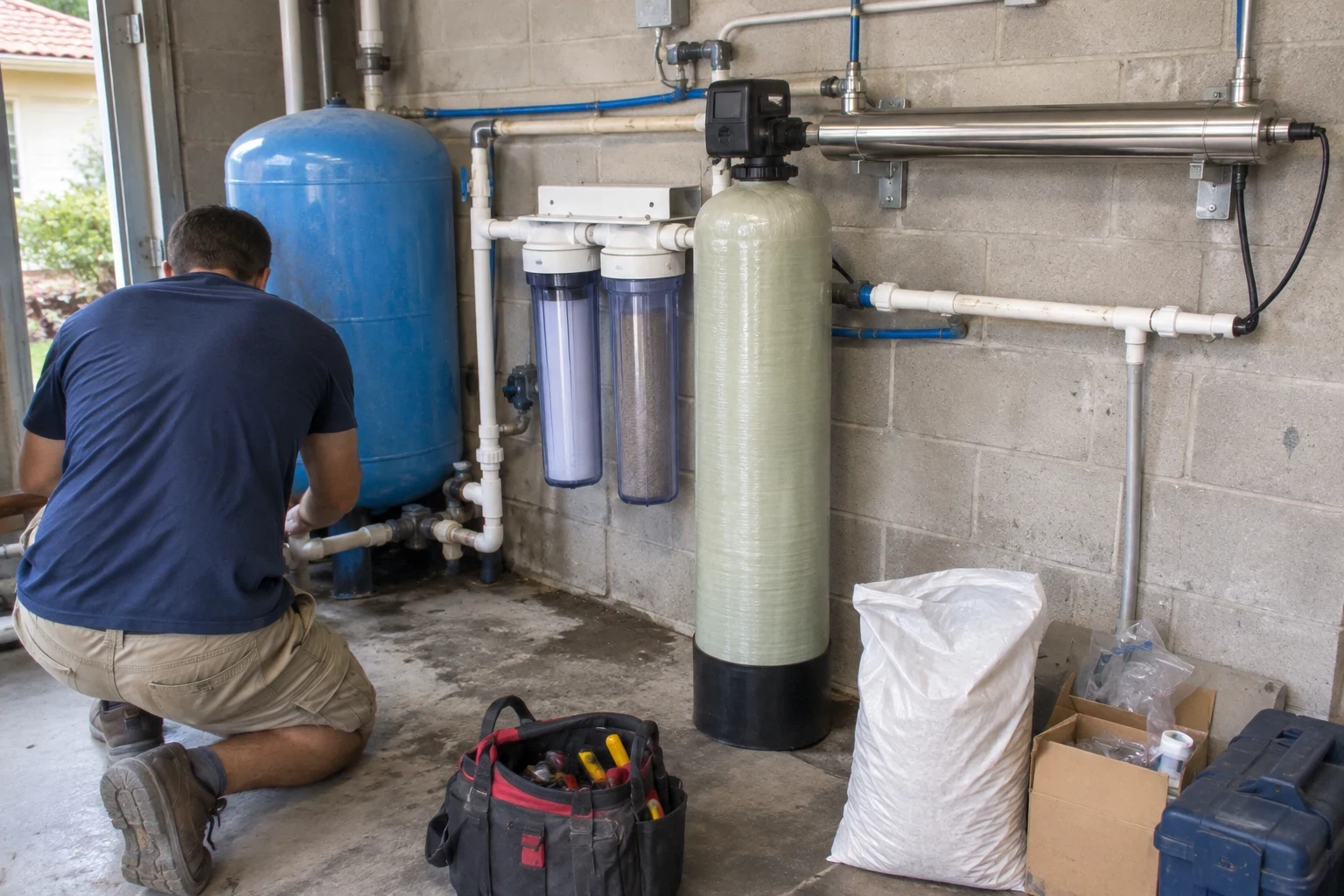
Your well water smells like rotten eggs, stains the tub orange or leaves white crust on everything. We figure out which problem you have, explain what each fix does in plain words, and install equipment sized for your well and your home.
What well water treatment actually means
With a private well, nobody cleans the water upstream of you. It goes from the ground to your faucet as is. Most of the time the trouble is one of three things: hydrogen sulfide gas (the rotten-egg smell), dissolved iron (orange and brown stains) or hardness minerals (white scale). Wells around Tampa Bay often pull from limestone, so hardness and sulfur tend to come as a pair.
Each problem needs its own fix. A carbon filter won't stop iron. A softener won't touch sulfur. So we start by sorting out which problem you have, then tell you what each piece of equipment does and why it's on the list. If one tank handles it, you get one tank.
What the work includes
- Sulfur and odor removal
- For rotten-egg smell we use an air-injection or oxidizing filter. It changes the gas into a form the media can trap, then flushes it out on a schedule.
- Iron and manganese filtration
- Iron is clear while it's dissolved and turns orange once it meets air. An iron filter catches it before it reaches your fixtures, laundry and water heater.
- Softening when hardness calls for it
- If your water leaves heavy scale, a softener goes in after the iron filter. That order keeps iron from fouling the softener resin.
- Sediment protection
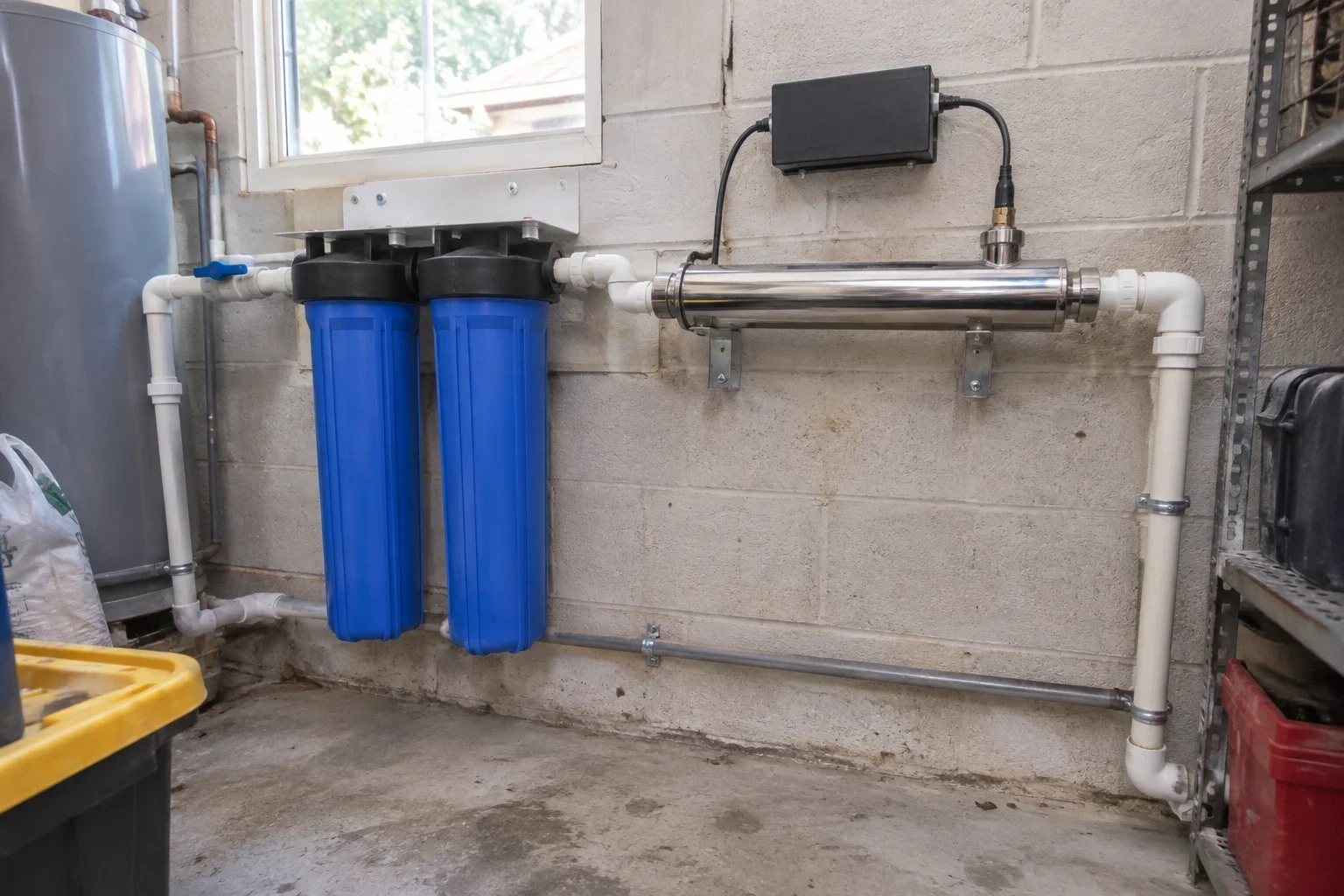
- Sand and grit from the well chew up valves and clog filters. A sediment stage at the front protects everything after it.
- Bypass valve and proper drain
- We install a bypass on each system, so your faucets still work while the equipment is being serviced. Backwashing filters need a legal drain line, and we plan that out before install day.
How to tell your well water needs treating
A rotten-egg odor
The odor comes from hydrogen sulfide gas. If it shows up only at hot taps, the water heater rather than the well may be causing it, and we'll tell you so.
Orange or brown staining
Rust-colored toilet rings, shower streaks and graying white laundry are all signs of iron.
White crust and spotted glasses
Scale on faucets and showerheads points to hard water. The same buildup settles out of sight at the bottom of your water heater and cuts its efficiency.
Dark specks or slime
Black specks may be manganese. Slime in the toilet tank may be iron bacteria, which feed on the iron in your water.
Equipment that quit working
If the odor or stains returned with a filter already in place, the media may be spent or the system may be undersized. Our Water Softener & Filtration System Replacement page explains that.
What sets the price
No two wells are alike, so well systems differ more than city-water setups. The cost depends on what your water carries and how much your household uses. You get the complete price in writing before we start.
Number of problems to fix
Sulfur on its own may take a single tank. When sulfur, iron and hardness show up together, it usually takes two or three stages.
How severe it is
Heavy iron or a strong sulfur odor needs bigger tanks or different media than a mild case does.
How much your well puts out
Filters that backwash need a strong enough flow to rinse themselves. A low-output well can change which equipment is the right fit.
Room, piping and a drain
An open garage spot near a drain keeps things simple. Long pipe runs, cramped spaces or a missing drain mean more labor and parts.
What a well water job looks like
- 1
Give us a call
Describe what you're seeing and smelling, the age of the well and the equipment already in place. If you've had your water tested at a lab recently, have that report handy.
- 2
We come see your setup
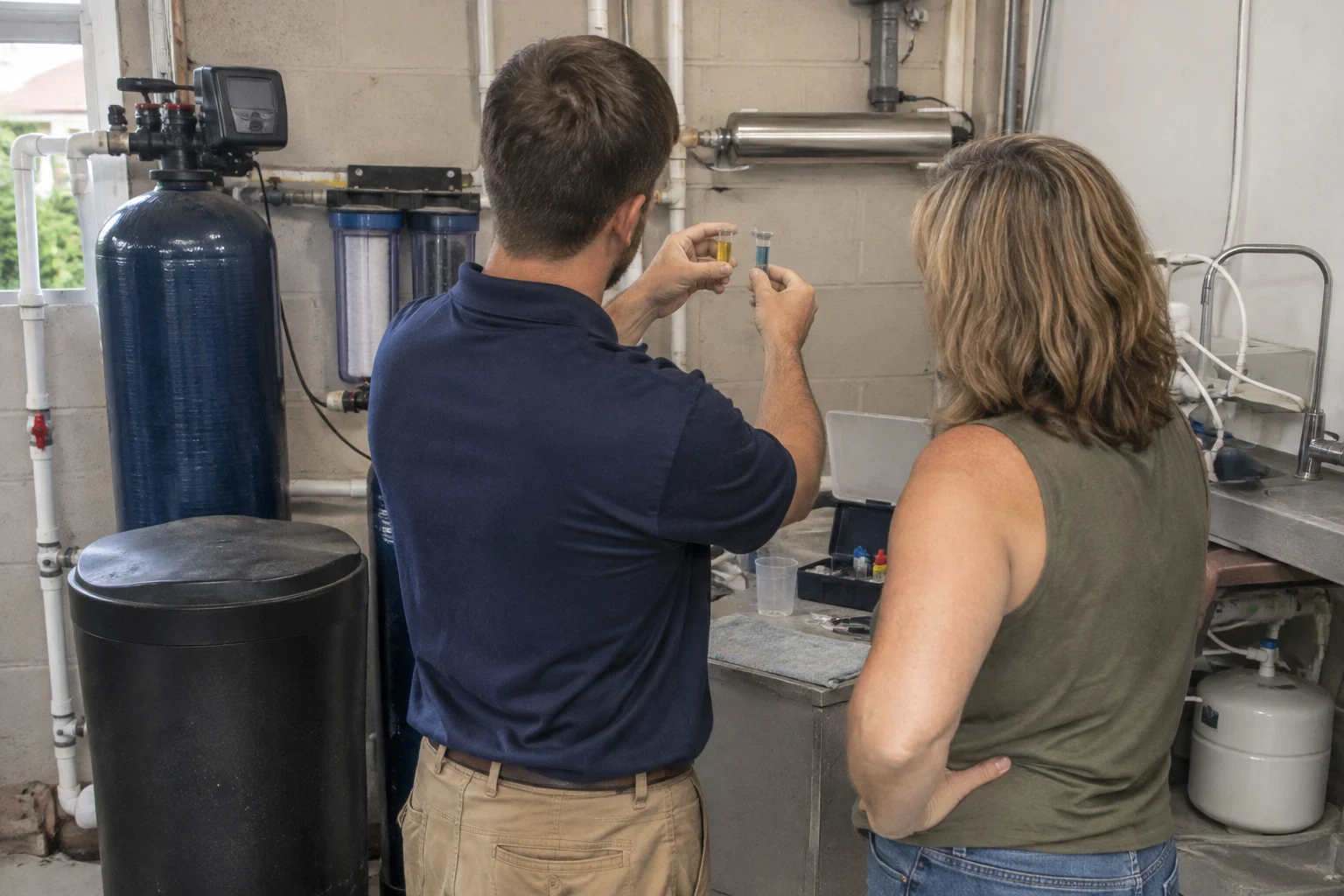
We check the well tank and pressure switch, look at the stains around the house and find room for a system. We also look for a nearby drain and outlet.
- 3
A recommendation in everyday words
We give you a written list of the equipment we'd install and what each part does. If something simpler will work, we tell you.
- 4
The install
We turn off the water, connect the system after the pressure tank, add a bypass and run the drain line. Most jobs take part of a day. We rinse the system, set the backwash timing and clean up.
- 5
We show you around and stay in touch
You learn how the bypass works and what to watch for. After that, call us any time for ongoing support, whether it's regular upkeep, fresh filters or a repair when a part misbehaves.
Questions about treating well water
Will a single filter solve every problem?
In some cases. Certain media can take care of light iron and light sulfur in one tank. When the water is also hard or heavy with iron, a second stage is usually needed. We explain the reason before you spend anything.
Why do I only smell it from the hot water?
Bacteria inside the water heater can react with its anode rod and create a sulfur odor. That usually means the heater is the source, not the well. We'll sort out which it is so you don't pay for equipment you can skip.
Does a well need a water softener?
Only when the water is hard enough to leave scale. Many wells around here are, though not all. Our Water Softeners page explains how they work and when they're worth it.
Will treating my well water reduce pressure?
It shouldn't if the tanks fit your well and household. Pressure loss after an install usually comes from a system that's too small. We size ours to your well's flow and to how much water your household uses at one time.
What can I do for drinking water in particular?
Treatment for the whole house handles odor, stains and scale. For an added step on drinking and cooking water, a reverse osmosis unit under the kitchen sink is the tool. Our Reverse Osmosis page has the details.
What maintenance does a well system take?
Most filters rinse themselves on a timer. Some media needs replacing after a few years, and sediment cartridges are changed more often. You get an easy schedule from us.
Tell us what your well water is doing
Describe the smell, the stains or the scale, and we'll walk you through what's likely causing it. We serve St. Petersburg, Pinellas Park, Lealman and nearby areas.